Showing posts with label Courts. Show all posts

Monday, September 17, 2007

Ding Dome Gossip

Faithful drinkers of this swill will recall that earlier this year we talked about hearing about talks about settlement talks in the Judicial ethics complaint against Luzerne County's only female jurist, Ann Lokuta.

We had heard from more than one source that Judge Lokuta was offered the option of retiring -- with full benes in place -- and that the Judge was seriously considering the offer. That story was shot down by the Judge's then-new attorneys. Now comes confirmation of the report, of a sort. The pretend newspaper in Scran'en last week "reported" confirmation that a deal was offered to Lokuta late last year, but that the Judge didn't grab it.

Yep, just like a broken clock . . . . .

Tuesday, May 22, 2007

Then Again, Maybe Not

Over the last three weeks, we heard from three different sources in Luzerne County that Judge Lokuta was on the verge of cutting a deal to resolve the charges pending against her. We blabbed about it here.

Part of the report said that her trial was imminent and thus the resolution. However, on checking with the Court of Judicial Discipline, we learned that no trial date has been set formally at this time. We then contacted her new counsel about the settlement rumors.

It had been reported in one of the local rags that the Judge had hired Nancy Burdine of the Philadelphia law firm of Pelino & Lentz, P.C., so we contacted her. In reply, we didn't get a no comment -- Ms. Burdine responded that "We do not believe that there is any such arrangement." Now, that's a curious response. It suggests a number of possibilities, some conflicting. But we'll let that answer perc a little as we touch base over the next week or so with some of our former colleagues up there.

One other bit 'o news, Ms. Burdine revealed that Louis Sinatra, a litigation partner in her firm, was the main contact person on the Lokuta case. That makes a bit more sense -- Ms. Burdine, although I am sure extremely capable, is a relatively junior lawyer while Mr. Sinatra has several decades litigation experience.

As far as we could tell, this is the first published confirmation that Judge Lokuta has retained this firm and its lawyers as her new defense counsel.

Wednesday, May 16, 2007

Resolution Could Be Near in Lokuta Case

{UPDATED 5/18} It is looking like the men sharing the bench with Luzerne County Common Pleas Judge Ann Lokuta may be getting what they hoped for when they got together-- ahem, okay, allegedly got together-- to contrive the charges filed against Judge Lokuta by the Judicial Conduct Board of Pennsylvania late last year. (See the update after the jump -- some of the information appears to have been incorrect, casting some doubt on the report of a deal.)

Judge Lokuta recently fired her lawyer, Sam Stretton, supposedly after learning that he was advising the (recently-failed) judicial campaign of her former law clerk, Tom Marsilio. (Marsilio, for his part, was/is supposedly set to be a witness for the prosecution. It has been said that he easily criticized his former employer on the campaign trail when the question was raised. Asked at one gathering how he would work with her, he reportedly told the audience that "no one can work with her". One can be curious as to why and when Marsilio came to that conclusion -- he was an enthusiastic speaker at a high-ticket fundraiser for the judge in her recent retention election.)

Back to Judge Lokuta after the jump . . .

The judge's trial on the charges is said to be set for later this month (something I am trying to confirm). {UPDATE 5/18: The information about the trial date appears to be wrong. The Court of Judicial Discipline has advised us that no trial date has been set.} Through the gapacious Luzerne County Ding Dome grapevine, we hear that a deal is about to be cut which would permit the Judge to retain her pension interests and open up another space on the bench for yet another white male ass.

We hear that the Judge will be bidding the Courthouse a not so fond adieu sometime this summer, perhaps as early as June 1.

In our other ear, a different friend-who-heard-something-from- someone-who-thinks-they-are-in-the-know, whispered the name of a (very capable) local attorney, with deep political roots in those parts, who is in line to get the nod from Fast Eddie to fill Lokuta's spot on the bench. We'll keep that one under our sombrero for now.

Tuesday, May 01, 2007

Welcome, Virgina Supreme Court

Over the last couple of days, we have had well nigh on two dozen visits from the server of the Supreme Court of the Commonwealth of Virgina. Someone in that building has spent nearly two hours perusing our entries concerning the court system in general and a certain lady judge from NEPA in particular.

Hope we were helpful.

But we are still scratching our heads to make the connection on this one.

Monday, April 23, 2007

PA Bar Launches PA Vote Smart for Judicial Races

Offering links to the websites of judicial candidates -- statewide and local -- as well as to judicial evaluations of the candidates, the Pennsylvania Bar Association has launched PA Vote Smart. Unfortunately, the links to the judicial evaluations are fubar. Someone typed in slashes facing the wrong way and linking to the wrong page.

Hopefully, they will figure it out and get it fixed.

In the meantime, you can get the statewide candidate evaluations here.

Wednesday, April 18, 2007

So Much For Justice Roberts' Respect for Precedent

At his confirmation hearings, now-Chief Justice Roberts earnestly and unblinkingly insisted that his respect for the venerable principle of stare decisis would not permit him to discard well-settled precedent. And butter wouldn't melt in his mouth . . . .

Today the Supreme Court, by a 5-4 vote, employed a tactic honed to a fine edge by Roberts's predecessor -- overrule well-settled precedent and deny, with faces straight and sober, that anything was overruled. In today's opinion, they upheld the federal ban on the dilation and extraction abortion method. I don't have time for an exegesis, but Ginsberg's spot-on dissent makes the point:
Today’s decision is alarming. It refuses to take Casey and Stenberg seriously. It tolerates, indeed applauds, federal intervention to ban nationwide a procedure found necessary and proper in certain cases by the American College of Obstetricians and Gynecologists (ACOG).

It blurs the line, firmly drawn in Casey, between previability and postviability abortions. And, for the first time since Roe, the Court blesses a prohibition with no exception safeguarding a woman’s health.

I dissent from the Court’s disposition.

Retreating from prior rulings that abortion restrictions cannot be imposed absent an exception safeguarding a woman’s health, the Court upholds an Act that surely would not survive under the close scrutiny that previously attended state-decreed limitations on a woman’s reproductive choices.

Further reading:

Reuters: US top court upholds law banning some abortions
The Caucus: 2008 Candidates on the Abortion Ruling
PR Inside: ACLU and National Abortion Federation Criticize Decision
Brisbane Times: US Supreme Court decision may lead to abortion restrictions
VOA: US Supreme Court Upholds Ban on Disputed Abortion Procedure
Newslocale: Implications Of The Federal Ban On Partial-Birth Abortions
The Australian: Bush hails US court abortion decision
Christian Science Monitor: US Supreme Court allows late-term abortion ban
PRNewswire: Roberts Court Shows Its Cards: In a Stunning Reversal, Supreme Court Rules Against Women's Health, in Favor of Abortion Restrictions
NYTimes: Supreme Court Upholds Ban on Abortion Procedure
The Nation: The Politics of Supreme Court Nominations
BBC: US top court backs abortion ban
Bloomberg: Partial Birth' Abortion Ban Upheld by Top U.S. Court
AP: GOP candidates praise abortion ruling
Townhall: A Closer Look at Partial Birth Abortions
CNN: Justices uphold ban on abortion procedure
Think Progress: Breaking: Supreme Court Upholds ‘Partial Birth’ Abortion Ban
WaPo: High Court Upholds Curb on Abortion

Stix: Finally
Suburban Guerilla: Playing (Too) Nice
Slog: Justice Ginsburg’s Dissent
Linkmeister: SCOTUS, Alito and abortion
Punditbuzz: Partial Birth Abortion Ban Upheld
Mainly Politics: Right to abortion no longer guaranteed
Oliver Willis: The Left Needs To Wise Up On The Supreme Court
Martin Lewis: Abortion Ban & Virginia Massacre: Don't Forget To Thank The Nader Voters
Const. Party: Supreme Court does something right about Abortion
Galloping Beaver: Rhetoric trumps Law in US Supreme Court
Descent into Madness: Danger: Supreme Court Upholds Federal Abortion Ban

Dahlia Lithwick: Justice Kennedy Knows Best?
Edward Whelan: A Welcome Decision on Abortion
Los Angeles Times: An Unconscionable Abortion Ruling
SCOTUSblog: Court Upholds Federal Abortion Ban
Christine Todd Whitman: Carbon Ruling: A Welcome First Step
J. Fund, OpinionJournal: O'Connor & the Twilight of Affirmative Action
Boston Herald: The Supremes Off the Beam

Friday, April 13, 2007

Gotta love the Google

Love it the way the Google saves its searches. We got some interesting hits this week from up in Wilkesberry (hey, is your snow off the streets yet? I have to go up that way next week). It seems that someone at one of the really big local firms up there spent quite a bit of time looking over our various posts about Judge Lokuta. Hope we amused. But, pal, if you really want to get the scoop on what's going on with the judge -- you might want to spell her name correct when you Google it -- It is "Ann Lokuta", not, "Anne Lokuta".

Tuesday, April 03, 2007

Supreme Smackdown

In an opinion released yesterday, the United States Supreme Court rejected the Bush Administration's arguments that that the US Environmental Protection Agency did not have the authority to regulate carbon-dioxide in automobile emissions. The Court also ruled that the EPA did not have the "discretion" to refuse to regulate greenhouse gas emissions unless it could provide a scientific basis for its refusal.


The 5-to-4 decision was a complete smackdown of the Bush anti-environmental policies. Bush's EPA argued that it did not have the right to regulate carbon dioxide and other heat-trapping gases under the Clean Air Act, and that even if it did, it didn't have to if it didn't want to. The ruling does not force the environmental agency to regulate auto emissions, but it would almost certainly face further legal action if it failed to do so.

A little background . . . . the Clean Air Act requires that the EPA“shall by regulation prescribe . . . standards applicable to the emission of any air pollutant from any class . . . of new motor vehicles . . . which in [the EPA Administrator’s] judgment cause[s], or contribute[s] to, air pollution . . . reasonably . . . anticipated to endanger public health or welfare,” 42 U. S. C. §7521(a)(1). The Act defines “air pollutant” to include “any air pollution agent . . . , including any physical, chemical . . . substance . . . emitted into . . . the ambient air.” §7602(g).

The plaintiffs in this case petitioned the Environmental Protection Agency (EPA) to begin regulating the emissions of four such gases, including carbon dioxide, under the Clean Air Act. The EPA refused, arguing that (1) the Act does not authorize it to issue mandatory regulations to address global climate change, and (2) even if it had the authority, it wouldn't regulate the emissions because a causal link between greenhouse gases and the increase in global surface air temperatures was not unequivocally established.

The EPA was forced to modify its position when the case got to Court -- facts have a funny way of doing that to talking points. As the Supreme Court explained the position taken by the agency, it's not that greenhouse gasses don't cause global warming, it's that the problem is bigger than auto emissions:
EPA does not dispute the existence of a causal connection between man-made greenhouse gas emissions and global warming. . . . EPA nevertheless maintains that its decision not to regulate greenhouse gas emissions from new motor vehicles contributes so insignificantly to petitioners’ injuries that the agency cannot be haled into federal court to answer for them.
The argument was spurious, and the Court gave it the back of its hand:
But EPA overstates its case. Its argument rests on the erroneous assumption that a small incremental step, because it is incremental, can never be attacked in a federal judicial forum. Yet accepting that premise would doom most challenges to regulatory action. Agencies, like legislatures, do not generally resolve massive problems in one fell regulatory swoop.
Going nowhere with that one, the EPA then argued -- get this -- that carbon dioxide and other greenhouse gas emissions were not "air pollutants". The Court's response to the Bush Administration's claim that carbon dioxide is not a pollutant is the judicial equivalent of "you gots to be kiddin me":
The statutory text forecloses EPA’s reading. The Clean Air Act’s sweeping definition of “air pollutant” includes “any air pollution agent or combination of such agents, including any physical, chemical . . . substance or matter which is emitted into or otherwise enters the ambient air . . . .” §7602(g) (emphasis added). On its face, the definition embraces all airborne compounds of whatever stripe, and underscores that intent through the repeated use of the word “any.”25 Carbon dioxide, methane, nitrous oxide, and hydrofluorocarbons are without a doubt “physical [and] chemical . . . substance[s] which [are] emitted into . . . the ambient air.” The statute is unambiguous.
The Bush government's other arguments were even weaker and, in a 5-4 decision, the Supreme Court basically told Bush and the EPA: "do your damn job" --
Under the clear terms of the Clean Air Act, EPA can avoid taking further action only if it determines that greenhouse gases do not contribute to climate change or if it provides some reasonable explanation as to why it cannot or will not exercise its discretion to determine whether they do. Ibid. To the extent that this constrains agency discretion to pursue other priorities of the Administrator or the President, this is the congressional design. . . . [The President's] authority does not extend to the refusal to execute domestic laws.
"[The President's] authority does not extend to the refusal to execute domestic laws." -- about time someone told him that.

Guess who dissented? Roberts, Alito, Scalia, Thomas.

In the media:

Portland (ME) Press Herald: Justices side with Maine in two air pollution cases
Time: High Court Rebukes Bush on Pollution
Modesto Bee: Court: Clear the Air
Slate: Sin of Emission
San Francisco Chronicle: Ruling helps California battle global warming
Chicago Tribune: EPA must regulate greenhouse gases
WaPo: High Court Faults EPA Inaction on Emissions
NYTimes: Justices Say E.P.A. Has Power to Act on Harmful Gases

Wednesday, February 21, 2007

Ethics, NEPA Style

In perusing the NEPA "newspapers", so-called, for my rant about the inept response in dem parts to the recent snow storm, another item attracted my attention.

On Sunday past, a state superior court judge was the feature speaker at a local Republican Party conclave. The judge's speech was a passionate statement of support for the racist Hazleton immigration ordinance and its bigoted Mayor; not to be content, the judge also declared that the first amendment ought be rescinded for those who don't live in Hazleton: “I don’t think that the debate about the Hazleton ordinance should be allowed to be set by people who are not from the area". Yeah, well, anyway. That the judge, a Hazleton resident, a Republican, had such views isn't terribly surprising.

What caught my attention is that he was expressing them, for a political organization, even whilst a legal challenge to the ordinance was underway. The local newspaper said that the judge "prefaced his remarks by saying that the judicial code of ethics prevented him from speaking on the court case involving Hazleton’s Illegal Immigration Relief Act, he defended city Mayor Louis Barletta and council members as honorable people who shouldn't’t be berated by outsiders."

Indeed. Actually, that's not exactly what the Code of Judicial Conduct says. And if the state of journalism in NEPA wasn't as pathetic as it is, a real reporter would have known that -- or at least would have looked it up -- and called the judge on it. Let us begin with the first, informing Canon of that Code:
An independent and honorable judiciary is indispensable to justice in our society. Judges should participate in establishing, maintaining, and enforcing, and should themselves observe, high standards of conduct so that the integrity and independence of the judiciary may be preserved. The provisions of this Code should be construed and applied to further that objective.
Everything in the Code is to be read in light and supportive of Canon 1. And, what does the Code actually say about judges giving speeches and talking in public? Well, the judge got part of it correct, Canon 3 does prohibit comment about pending matters:
Judges should abstain from public comment about a pending proceeding in any court . . . .
Apparently, the judge thinks that means it is okay to talk about the issues surrounding a pending court case, as long as he disclaims that he is talking about that case. Here are some of his comments:
Stevens said local problems caused by illegal immigration include citizens having to pay for illegal immigrants’ “visits late at night to emergency rooms when no one’s around.” He also knows first-hand that law enforcement is frustrated when the federal Bureau of Immigration and Customs Enforcement tells officers who have apprehended illegal immigrants to “let them go.”

Stevens called for “common sense” decisions in courts when dealing with illegal immigrants. He said the federal government should allow state and local police to enforce immigration laws, county district attorneys to prosecute offenders and county and state judges to hear the cases.

Stevens said the money the federal government would save could be given to local governments for enforcement. “The law will be enforced and we won’t have the strain on our city resources that we have now.”
And, to be sure, judges are encouraged to speak out on matters relating to the administration of justice, but to do so in a way that will not suggest partiality on any issue:
Judges, subject to the proper performance of their judicial duties, may engage in the following quasi-judicial activities, if in doing so they do not cast doubt on their capacity to decide impartially any issue that may come before them: A. They may speak, write, lecture, teach, and participate in other activities concerning the law, the legal system, and the administration of justice.
But none of this is proper justification for a sitting appellate court judge to wax on in support of an ordinance being challenged in court -- even if not his own court. But, more fundamentally, what the hell was the judge doing as the featured speaker at a partisan political event? Forget what he was talking about, why was he there at all? Remember Canon 1 -- it is first for a reason:
An independent and honorable judiciary is indispensable to justice in our society.
Here's the official comment to the Model Code on which the Pennsylvania Code is based, explaining the importance of Canon 1:
Deference to the judgments and rulings of courts depends upon public confidence in the integrity and independence of judges. The integrity and independence of judges depends in turn upon their acting without fear or favor. A judiciary of integrity is one in which judges are known for their probity, fairness, honesty, uprightness, and soundness of character. An independent judiciary is one free of inappropriate outside influences. Although judges should be independent, they must comply with the law, including the provisions of this Code. Public confidence in the impartiality of the judiciary is maintained by the adherence of each judge to this responsibility. Conversely, violation of this Code diminishes public confidence in the judiciary and thereby does injury to the system of government under law.
Proceeding from these first principles, consider Canon 7, o'erlooked by the judge and reporter here:
A judge . . . should not . . . make speeches for a political organization.
Regardless the topic of the speech, a sitting judge should not even be attending a Republican Party event -- much less being the featured speaker, much, much less expounding on an issue hot in the courts in NEPA.

Judges shouldn't be attending partisan, fundraising events like the local Republican Party Lincoln Day dinner.

Period.


NOTE:

WE ARE MOVING!!! For now, the old Blogger address will bring you to the new location -- but that can change at any time. Please update your Blogroll, Links, and Bookmarks NOW:

www.abigfatslob.com

Click Here to Blogroll A Big Fat Slob!

Thursday, December 14, 2006

Sour Grapes, Anyone?

The wingnutz are at it again, and again, and again.

The wingnutz are wetting themselves over a Discovery Institute "discovery" that last December's federal court decision in the Intelligent Design case relied heavily on the plaintiff's proposed "Findings of Fact and Conclusions of Law".

Unfortunately, the Discovery Institute and its wingnut supporters either don't know how things work in Court, or think that no one else does. In other words, they are ignorant or dishonest.

Either way, they got it wrong.

You see, kids, that is what is supposed to happen.

This was a case tried without a jury -- what the grown-ups call a "bench trial". In bench trials, particularly in Federal Court, it is not only routine for the advocates to submit proposed Findings of Fact and Conclusions of Law to the court to use in it's decision -- it is required.

Thus, for example, the Local Rules for the United States District Court for the Middle District of Pennsylvania (where Intelligent Design had, and lost, it's day in Court), provide as follows:
LR 48.2 Civil Trials, Trial Without A Jury.
In a civil action tried without a jury, counsel shall file requests for findings of fact and conclusions of law with the pretrial memorandum. Additional requests may be made during the trial as to matters that could not have been reasonably anticipated before trial.
Once the Court hears all of the evidence, the judge picks and chooses from the various proposed findings those which the court has decided most fairly represent the credible evidence presented, and then works them into the written decision and opinion. That's just, and merely, what the court did here.

Maybe the Discovery Institute wackjobs are still smarting over the Court's smackdown of their brief. You see, the judge threw out the Discovery Institute friend of the court brief, like the garbage it was, saying that it was "clearly inappropriate", "improper", a "back-door" attempt to submit inadmissible material, "fundamentally unfair", and a violation of all of the applicable rules of court and evidence.

Sore losers. Emphasis on the losers.

Thursday, November 30, 2006

Inquiring Minds Want to Know

It seems that we've attracted the attention of government workers at the state and federal level today.

SOMEone at the United States House of Representatives spent a fair amount of time today searching the internets for information on "a big fat slob" (using Google and the IE browser on a Windows machine hooked up the the House network):
Domain Name: house.gov(United States Government)
IP Address: 143.231.249.# (Information Systems, U.S. House of Representatives)
ISP: Information Systems, U.S. House of Representatives
Referring URL: http://www.google.co...:en&q=a big fat slob
Search Engine: google.com
Search Words: a big fat slob
Now, I don't know that this was related to my articles about Reprehensible Tim Murphy, or my email inquiries sent to his Communications Director, yesterday and today. But, one can make a reasoned guess. I hope they found out what they wanted to find out.

And, I am sure that they also missed the irony here. My write-up on Reprehensible Murphy had to do with his use of his campaign staff to investigate the backgrounds of citizens who dared write letters to the editor critical of Murphy. Of course, instead of simply responding to my inquiries, they, naturally, began an investigation into the background of this Big Fat Slob. Wonder how long it will take that paranoid jerk to get his enemies list up to 30,000?

Moving from Southeast of home to Northeast of home, it looks like Luzerne County Courthouse workers were also "curious" -- if not assigned -- to find out more about Your Slob.

An employee at the Luzerne County Adult Probation Office spent part of the workday searching the 'net for information about "the [sic] big fat slob":
Domain Name: luzcoadultprobation.com (Commercial)
IP Address: 216.37.230.# (epix Internet Services)
ISP: epix Internet Services
Visitor's Time: Nov 30 2006 9:21:47 am
Wonder what the work-related reason for that search was?

But, the big winner for wasting Luzerne County money was this curious soul from the Luzerne County Courts, who spent the better part of over five hours of the workday on the 'nets searching out information about Yours Truly:
VISITOR ANALYSIS
Referring Link http://search.msn.com/results.aspx?q=the big fat slob&FORM=MSNH
Host Name luzernecountycourts.com
IP Address 216.37.230.249
ISP Epix Internet Services
Visit Length 5 hours 43 mins 34 secs
VISITOR SYSTEM SPECS
Browser MSIE 6.0
Operating System Windows 2000
Resolution 800x600
Javascript Enabled
Navigation Path
search.msn.com/results.aspx?q=the big fat slob&FORM=MSNH
November 30th 2006 09:21:11
November 30th 2006 09:25:34
November 30th 2006 09:29:52
November 30th 2006 09:32:56
November 30th 2006 12:24:28
November 30th 2006 12:24:50
November 30th 2006 13:34:48
November 30th 2006 13:36:29
November 30th 2006 15:04:10
November 30th 2006 15:04:45
So, right after I run a piece about the hit job pulled on Luzerne County Judge Ann Lokuta, and the rumors that President Judge Conahan and other members of the bench were secretly involved with the complaints leading to the charges, two County employees, using County property and on County time, are investigating whatever background information the internets will cough up on the Slob.

I'm sure that Conahan will get right on this and ferret out whomsoever is wasting County money and illegally using County property. The investigation will begin at once . . . . unless, of course, Conahan already knows who did it because he directed it.

It's unfortunate that the good people of Luzerne County, who have four newspapers within the range of a swung cat, don't have a single journalist willing to challenge Conahan and his heir apparent, Mark Chiverella.

And, I am sure that this all gives the people of Luzerne County a warm and fuzzy feeling to realize that Justice in their County, lay in such hands.

Finally, here's an obscure little ditty with which Murphy, Conahan, and their respective posses should become intimate.

Tuesday, November 28, 2006

Pot, Meet Kettle

Judge Ann Lokuta, sitting on the Court of Common Pleas for Luzerne County, has been a thorn in the sides of the County Democratic Party (who didn't support her candidacy), lawyers, prosecutors, and court staff throughout most of her 15 years or so on the bench (from what this outsider can tell, the problem seems to be as much from the good ol' boy -- emphasis on the gender-- attitude up there, as it is from Judge Ann's own "unique" personality).

Most of all, she has been an irritant to the other judges on that Court (apparently, especially, her boss, the President Judge, as the charges expressly refer to her criticisms of the way he runs the courthouse).

They have, finally, gotten back at her.

The Pocono Record reports today that the Pennsylvania Judicial Conduct Board has filed a 22-page complaint against the Luzerne County jurist. Sources tell me that this is the result of months of effort by many of her fellow-judges.

Back in the day, when I was a practicing attorney, I spent only a little bit of time in the Luzerne County Courthouse. While I never had the pleasure of appearing before her, I did have the chance, on several occasions, to observe her behavior and have, of course, listened with bemusement to all the gossip about her supposedly bizarre behavior.

I do not rise to defend Judge Lokuta -- let her able defense counsel take care of that.

But don't think that Judge Lokuta is an aberration on the Luzerne County bench -- based on years of conversations with lawyers who regularly and irregularly appear in Luzerne County, most of Judge Lokuta's fellow judges have no concept of what it means to be a judge.

With exceptions so rare you can count them on two fingers, the Luzerne County bench often can be depended on to allegedly decide cases based on the identities of the parties or their counsel.

They can be relied on to give the finger to litigants and the law by absolutely refusing to do their jobs -- minor, unimportant things, like issuing opinions explaining their decisions. Only a few weeks ago, one of their elite issued a large verdict in a defamation case and didn't bother to give the parties an opinion on why he reached the results that he did.

This lack of care is not surprising, consider that their President Judge was elected to office without ever having set foot in a courtroom, anywhere, as a lawyer representing a client -- he inherited a magistrate's job in Hazleton before he got hard for the big time.

They also delight in their unwritten rules -- such as granting a motion to compel discovery without even requiring the lawyer to notify the other side that the motion has been made.

Many of the judges also love to harass attorneys from outside the County for no other reason than that they can. (Okay, I'll have to admit a personal grudge about this one.)

As a whole, Judge Lokuta might be at the lower end of the lot, but it is already a fairly low lot of judges on the Luzerne County Bench. Collectively, this Bunch is one of the best arguments for merit selection you can find.

Tuesday, October 03, 2006

Disrespecting Democracy

Over the years, the Pennsylvania Supreme Court has put it's intellectual limitations on display with considerable frequency and has given this observer more than a little reason to question the integrity of the Court. Today, with but a few words, it adds cowardice to its long list of inadequacies, short-sheets democracy, and disrespects litigants who face the Court as truly their last resort.

Law, lawyers and the courts are the stuff which keeps society together. In ways large and small, lawyers put together the deals, settle the estates, document the contracts, and litigate the disputes -- in short, day in and day out they labor, mostly unsung and underappreciated, and always subject to ignorant attack, to keep our affairs on an even keel and to keep our fingers from one another's throats. It is respect for the law and the legal process which prevents neighbors from taking up arms to settle their own disputes and keeps anarchy from the streets. When Shakespeare wanted to demonstrate the dangerous intentions of the speaker, he had a character utter that most misused quote about killing all the lawyers. Billy and his buds knew that, take away the lawyers, take away access to justice, and anarchy would follow.

This is why such a high premium needs to be placed on judicial impartiality and integrity; why the courts need not only to actually give each litigant a fair hearing, but to work so they believe that they had their day in court -- even if it the result is against them.

Too often in Pennsylvania we see judges at every level showing the utter disrespect for the important role of the legal process, for the litigants who appear before them, and for the appearance of justice itself. They do this in many ways, sometimes they display overt friendship with one lawyer or another, by demeaning a party or counsel, or by refusing to explain their decisions to the litigants. Judges of Courts across the Commonwealth are more frequently resorting to one sentence, or even one-word decisions, leaving litigants and their counsel left only to guess at the basis. And worse, to assume that there was no rational basis for the decision -- that the decision was based on prejudice, cronyism, or favoritism of some kind.

And now, the Supreme Court of the Commonwealth of Pennsylvania has "led" the way by modeling that behavior. In an important appeal, with grand implications for access to the ballot by third parties, closely watched in political corners near and far, and of more than passing interest to the more than 50,000 Pennsylvania residents who put their names on the line of the Green Party nominations, the Supreme Court refuses to explain itself. They devote but 17 words -- including the date -- in "deciding" the appeal of the Green Party.

"AFFIRMED" is the entire holding, discussion, ruling, and decision of the Court.

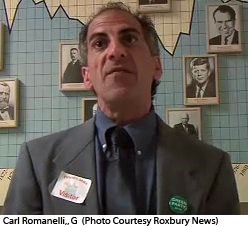
Oh, we knew Romanelli would lose, although it was clear that his argument was correct. Apparently, the Pennsylvania Supreme Court was unable to come up with any justification for the result which they wanted to achieve, so they did what small minds everywhere do when intellectually overwhelmed -- they just gave the finger to those 50,000 residents, the litigants, and fairness.

Hoo-ray for Pennsylvania.


Here it is, the whole damned thing:

J-167-2006
IN THE SUPREME COURT OF PENNSYLVANIA
MIDDLE DISTRICT

IN RE: NOMINATION PAPER OF MARAKAY ROGERS, CHRISTINA VALENTE AND CARL J. ROMANELLI AS CANDIDATES OF AN INDEPENDENT POLITICAL BODY FOR GOVERNOR, LIEUTENANT GOVERNOR AND U.S. SENATOR IN THE GENERAL ELECTION OF NOVEMBER 7, 2006

WILLIAM R. CAROSELLI, FRED R. LEVIN, DANIEL J. ANDERS AND PETER D. WINEBRAKE

APPEAL OF: CARL ROMANELLI
::::::::::::::
No. 106 MAP 2006
Appeal from the order of the
Commonwealth Court at No. 426 MD 2006
entered on 08-24-2006.

ORDER
PER CURIAM
DECIDED: October 3, 2006

AND NOW, this 3rd day of October, 2006, the Order of the Commonwealth Court is
hereby AFFIRMED.

Romanelli's Supreme Argument

Green Party candidate Carl Romanelli, despite having gathered over 50,000 uncontested signatures of Pennsylvania voters on his nominating petitions, is off the ballot unless he can convince the Pennsylvania Supreme Court that an election is an election.

Romanelli finds himself in this position because, in 2004, Bobby Casey Junior, running against an underfunded "who???", in a Presidential election year which saw the largest voter turnout in Pennsylvania history, picked up alot of votes. The Pennsylvania statute at play (25 P.S. Section 2911(b)) states, in pertinent part, as follows (emphasis added):
Where the nomination is for any office to be filled by the electors of the State at large, the number of qualified electors of the State signing such nomination paper shall be at least equal to two per centum of the largest vote cast for any elected candidate in the state at large at the last preceding election at which State-wide candidates were voted for.
This statute clearly requires that the touchstone for the third-party nominating petition shall be the largest number of votes received by a successful "candidate" in the preceding statewide "election". For this year's general elections, the State Board designated the 2004 election of Casey as "the largest vote cast for any elected candidate in the state at large at the last preceding election at which State-wide candidates were voted for", leading to the 67,000+ signature requirement for this year's minor party candidates.

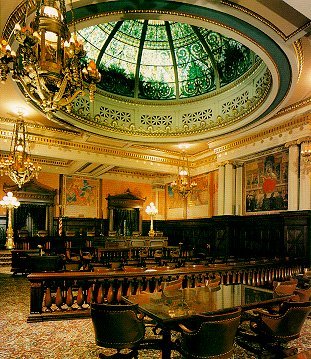
But, there was a statewide election in 2005 -- the judicial retention election of Justice Sandra Schultz Newman. She won retention with about 800,000 votes, meaning that Romanelli would need submit slightly less than 16,000 signatures. (That's her photo just below this paragraph.)

Romanelli is challenging the State Election Board's dictation that the 2005 election was not an election, and has recently filed his brief with the Pennsylvania Supreme Court (h/t to PoliticsPA). Before referring to Romanelli's brief, however, let us take a look at the primary sources for the argument -- the State Constitution and legislation. The issue appears to come down to the question of whether Newman was a "candidate" in an "election".

Section 15 of the Constitution of the Commonwelath of Pennsylvania addresses the retention of judges (emphasis added):
(b) A justice or judge elected under section thirteen (a), appointed under section thirteen (d) or retained under this section fifteen (b) may file a declaration of candidacy for retention election with the officer of the Commonwealth who under law shall have supervision over elections on or before the first Monday of January of the year preceding the year in which his term of office expires. . . .
The State Constituion here does two important things -- it makes it clear that the judge seeking to remain in office is (i) a CANDIDATE in (ii) a retention ELECTION. There is no asterisk next to either term in the Constitution, or explanation later that the drafters weren't "serious about that" when they called the judge standing for retention a candidate in an election.

Then we have the legislation which derives from and enacts section 15 of the Constitution (fyi, the Constitution trumps a statute). Chapter 32, section 3153 of the Pennsylvania Consolidated Statutes addresses the retention "thing" for judges" (NB the link to the statute is to a private site run by a DJ. It is a travesty that our state government refuses to provide the full text of all laws online):

§ 3153. Retention Elections After Regular Term.

(a) General rule.- A judge elected under section 3131 (relating to selection of judicial officers for regular terms) or retained under this section may file a declaration of candidacy for retention election with the Secretary of the Commonwealth on or before the first Monday of January of the year preceding the year in which his term of office expires. If no declaration is filed, a vacancy shall exist upon the expiration of the term of office of such judge, to be filled by election under section 3131(c).
Oops, they did it again -- there's those words problematic to the anti-democratic forces trying to keep a candidate off the ballot -- "candidate" and "election".

It doesn't end there, as Romanelli's brief makes clear, the various election laws enacted by the Pennsylvania State legislature clearly treat the "retention thing" as what the Constitution says it is -- an election:
The judicial code also provides that each judicial officer of the Commonwealth shall be sworn into office and that oath must be taken after a judge’s appointment or election, “and after each retention election….” 42 Pa.C.S. §3151.

There are at least four definitions of the word “election” contained in the Election Code itself.

Section 102(f) provides that “the word ‘election’ shall mean any general municipal, special or primary election, unless otherwise specified.” 25 P.S. § 2602(f), (emphasis added).

Sections 1101 and 1101-A, concerning ballot labels on voting machines and electronic voting systems, respectively, both state that an “election” means “all general, municipal, primary, and special elections.” 25 P.S. §§ 3001(12); 3031.1.

The Pennsylvania campaign finance law, Article XVI of the Election Code, states that “the word ‘election’ shall mean any retention, primary, special, municipal or general election at which candidates appear on the ballot for nomination or election . . . .” 25 P.S. § 3241(c).

A judicial officer who is seeking to be retained for another term is a “candidate for election” under both definitions of what constitutes a “candidate” contained in the Election Code. Compare 25 P.S. § 2602(a) with 25 P.S. § 3241(a). Were a judicial retention candidate not a “candidate for election” then the entire campaign finance reporting system, which no one disputes applies to candidates in judicial retention elections, would be rendered meaningless.
The Romanelli brief goes further and recounts the sundried absurdities which would necessarily result from a reading of the election code to exclude rentention elections within the definition of elections. From the plain text of the Constitution and the statutes deriving their authority from the Constitution, Newman was a candidate for election to a statwide office and her votes should be the measure for third party candidates.

But in addition to the plain meaning argument, Romanelli has another forceful one -- the hard rule, long established and oft repeated in election cases in this Commonwealth -- that in every case the election code must be stretched to its furthest reaches to allow for more ballot access, and every presumpotion against restriction granted. Again, as the Romanelli brief summarizes:
"The Election Code is to be liberally construed so as not to deprive a candidate of the right to run for office or the voters of their right to elect the candidate of their choice.” Smith v. Brown, 590 A.2d 816, 818 (Pa. Cmwlth. 1991). This construction of the Election Code is a longstanding and established policy. See also In re Nomination Petitions of Fumo, 577 Pa. 496, 846 A.2d 672 (2004); font-style: italic;">In re Nomination Petition of Driscoll, 577 Pa. 501, 508, 847 A.2d 44, 49 (2004)(noting that “in reviewing election issues, we must consider the longstanding and overriding policy in our Commonwealth to protect the elective franchise”); Petition of Cioppa, 533 Pa. 564, 570 626 A.2d 146, 149 (1993) (applying the “spirit of liberality in construing our Election Code” prospectively, and noting that the “power to vitiate a ballot for minor irregularities should be used sparingly, … only for very compelling reasons”) (emphasis added).
The Pennsylvania Supreme Court will need to ignore plain text of the Constitution and stautues, and turn away from long-established principle, to kick Romanelli off the ballot. But, in my opinion, our Pennsylvania Supreme Court has before demonstrated the lack of intellect and integrity to permit them to do just that.

I expect that Romanelli will lose a won argument because of the general indifference to law and preference for result-oriented decisions which I think sadly characterize this Court.

Monday, September 25, 2006

Romanelli's Fate Rests with PA Supreme Court

As has already been widely reported (it having been announced on PCN right before the debate between Romanelli and Santorum), the Democrats were successful in challenging the signatures, gathered by Republican operatives and money, on Carl Romanelli's nominating petitions. A State Court decided today that Romanelli fell short of the required 67,000 signatures and ordered him off that ballot. The decision is being appealed.

Meanwhile, Romanelli is challenging the State Election Board's statutory interpretation which led to the 67,000-signature requirement, which Romanelli missed by about 9,000. An appeal from an adverse Commonwealth Court decision was filed in late August, and is proceeding apace before the Pennsylvania Supreme Court, with briefs due on Thursday this week.

If you've been paying attention, you know that minor parties in Pennsylvania need to submit petitions bearing the number of signatures equal to at least 2% of the highest vote-getter in the statewide election immediately preceding the general election for which they seek to nominate a candidate.

The Pennsylvania statute (25 P.S. Section 2911(b)) states, in pertinent part, as follows:
Where the nomination is for any office to be filled by the electors of the State at large, the number of qualified electors of the State signing such nomination paper shall be at least equal to two per centum of the largest vote cast for any elected candidate in the state at large at the last preceding election at which State-wide candidates were voted for.
The State Board designated the 2004 election of Casey as "the largest vote cast for any elected candidate in the state at large at the last preceding election at which State-wide candidates were voted for", leading to the 67,000+ signature requirement for this year's minor party candidates.

But, there was a statewide election in 2005 -- the judicial retention election of Justice Sandra Schultz Newman. She won retention with about 800,000 votes, meaning that Romanelli would need submit slightly less than 16,000 signatures. Based on today's ruling, Romanelli far exceeded that number of valid signatures.

The Commonwealth Court sided with Casey's party in rejecting Romanelli's argument and it is from that decision which Romanelli has now appealed. The Commonwealth Court ruled that a retention election was not an "election" within the meaning of the statute. Romanelli's argument to the Supreme Court is multi-faceted, but the central point is made obvious by this quote from his appeal:
Objectors to the Romanelli nomination papers argue that the Pennsylvania Election Code does not apply to the retention elections held in the Municipal Election or General Election. The absurdity of their position is exposed when taken to its logical conclusion. If the Election Code does not apply to retention elections then the prohibitions against stuffing the ballot box, 25 P.S.§ 3535 Repeat voting at elections, Bribery, 25 P.S. § 3539, Bribery at elections, among other things, are now perfectly legal with respect to judicial retention elections. This is hardly the legislative intent or judicial interpretation one would expect in a government of laws. Common sense has to prevail here.
From a reading of the statute, it is clear that the legislature did not draw any distinction between retention elections and any other statewide election. To rule in favor of Casey's party, the Commonwealth Court had to read that distinction into the law because a facial reading required a ruling in favor of Romanelli. The Pennsylvania Supreme Court will have to decide if it wishes to write the law or to simply apply it as the legislature wrote it. As my two readers know, I don't hold much faith that the Pennsylvania Supreme Court will reach the correct result.

As a policy matter, I fail to understand why a Party who can gather 50,000 valid signatures can't get on the ballot. It seems awfully unDemocratic to require that many in the first place or to have someone thrown off who can get that many people to sign the petitions.

What Rick Santorum did here, in (however incompetently) funding and arranging the petitions drive was cynical, desperate and shameful. But there is enough shame to go around in this debacle.

(Thanks to Gary at Declarations for alerting me to the decision!)

Monday, August 28, 2006

Romanelli Files Appeal with PA Supreme Court

As expected, Carl Romanelli has filed an appeal to the Pennsylvania Supreme Court from the decision of the Commonwealth Court rejecting his argument that the retention election of Justice Newman was the last statewide election on which his signature requirement should have been based.

If you've been paying attention, you know that minor parties in Pennsylvania need to submit petitions bearing the number of signatures equal to at least 2% of the highest vote-getter in the statewide election immediately preceding the general election for which they seek to nominate a candidate.

The Pennsylvania statute (25 P.S. Section 2911(b)) states, in pertinent part, as follows:
Where the nomination is for any office to be filled by the electors of the State at large, the number of qualified electors of the State signing such nomination paper shall be at least equal to two per centum of the largest vote cast for any elected candidate in the state at large at the last preceding election at which State-wide candidates were voted for.
The State Board designated the 2004 election of Casey as "the largest vote cast for any elected candidate in the state at large at the last preceding election at which State-wide candidates were voted for", leading to the 67,000+ signature requirement for this year's minor party candidates.

But, there was a statewide election in 2005 -- the judicial retention election of Justice Sandra Schultz Newman. She won retention with about 800,000 votes, meaning that Romanelli would need submit slightly less than 16,000 signatures.

The Commonwealth Court sided with Casey's party in rejecting Romanelli's argument and it is from that decision which Romanelli has now appealed. The Commonwealth Court ruled that a retention election was not an "election" within the meaning of the statute. Romanelli's argument to the Supreme Court is multi-faceted, but the central point is made obvious by this quote from his appeal:
Objectors to the Romanelli nomination papers argue that the Pennsylvania Election Code does not apply to the retention elections held in the Municipal Election or General Election. The absurdity of their position is exposed when taken to its logical conclusion. If the Election Code does not apply to retention elections then the prohibitions against stuffing the ballot box, 25 P.S.§ 3535 Repeat voting at elections, Bribery, 25 P.S. § 3539, Bribery at elections, among other things, are now perfectly legal with respect to judicial retention elections. This is hardly the legislative intent or judicial interpretation one would expect in a government of laws. Common sense has to prevail here.
From a reading of the statute, it is clear that the legislature did not draw any distinction between rentention elections and any other statewide election. To rule in favor of Casey's party, the Commonwealth Court had to read that distinction into the law because a facial reading required a ruling in favor of Romanelli. The Pennsylvania Supreme Court will have to decide if it wishes to write the law or to simply apply it as the legislature wrote it. As my two readers know, I don't hold much faith that the Pennsylvania Supreme Court will reach the correct result.

h/t to PoliticsPA for the Appeal.

Thursday, August 24, 2006

PA Supreme Court Convolutes Law to Punish Nader

Presenting yet another reason why the Pennsylvania Supreme Court is generally held in low regard in legal circles, "Justice" Sandra Newman has rewritten the law to fit the decision she wanted to render. The Court issued an opinion upholding a Commonwealth Court order that Nader and others pay over $80,000 in court costs in connection with the successful challenge to the third-party nominating petitions in 2004.

At the outset, let us understand that it is unusual in the American system of jurisprudence for a litigant to be forced to bear the expenses of the winning side. This is known as the "American Rule" and it grew from the colonist's strong aversion to the British system (judicial and otherwise) which favored the strong, wealthy and powerful. From the start, American jurisprudence advocated a system under which access to the courts by the weak and poor would not be chilled by the prospects of having to pay the fees and expenses of the other side. Think about that a moment. We live in a capitalist society where access to the best legal representation is a matter of affordability. The poor generally have fewer choices than the wealthy and the better advocates are usually available only to the wealthy. Believe it or not, even a just cause can fail to prevail in our system largely because of the quality of the advocacy. (Can you say "OJ"?)

That bit 'o legal instruction out of the way, understand, then, that such costs can be assessed only pursuant to legal authority. There are a number of statutes which permit of "fee-shifting" to require the loser to pay (civil rights laws, consumer protection statutes, are examples). In the case of the Nader petitions, that statute is Section 977 of the Election Code, which states:
Objections to nomination petitions and papers:

All
nomination petitions and papers received and filed within the periods limited by this act shall be deemed to be valid, unless, within seven days after the last day for filing said nomination petition or paper, a petition is presented to the court specifically setting forth the objection thereto, and praying that the said petition or paper be set aside. A copy of said petition shall, within the said period, be served on the officer of board with whom said nomination petition or paper was filed. Upon the presentation of such a petition, the court shall make an order fixing a time for hearing . . .

If the court shall find that said
nomination petition or paper is defective. . . it shall be set aside. . . .

In case any
such petition is dismissed, the court shall make such order as to the payment of the costs of the proceedings, including witness fees, as it shall deem just. . . .
Typically, this Pennsylvania law is not terribly well-written (Pennsylvania has one of the fewest percentages of legislators trained in the law of the fifty states, and it shows). However, it is clear that the references to the "petition" which I have boldfaced are references to the objecting petition and the "nomination petition or paper" refers to the minor-party candidate's nominating petitions.

If that is correct, and I think it is clear that it is, then the legislative scheme provided for the dismissal, simpliciter, of a defective nominating petition. However, the statute provides that the objector could be ordered to pay the costs of the minor-party candidate who successfully defends against an objection.

This reading fits hand-in-glove with the tradition of the American Rule. Think about it, minor party candidates are generally the weaker outsiders, struggling against a system designed to make them irrelevant and against well-financed "major" parties. The objections are financed by whichever political party sees a danger in the upstart third party candidate. So it makes sense for the legislature to have decided that if the big, rich, powerful major political party tries to bully a minor candidate out of the race with an expensive challenge (which, even if unsuccessful, could leave the minor party's available funds too depleted to finance any kind of effective campaign), then the bully would have to pay the little guy back -- but not visa versa.

But, Justice Newman and her cohorts decided that, with the final reference to "such petition", the legislature was referring to BOTH nominating and objecting petitions. This despite the fact that nowhere else in 977 did the legislature refer to nominating and objecting petitions simultaneously. Justice Saylor's dissenting opinion neatly eliminates any pretense of logic to the majority opinion and demonstrates that their reasoning was not in the least reasonable:
The majority'’s holding, however, is apparently that the last of these encompasses not only objection petitions, but additionally serves as a generic reference also subsuming both nomination petitions and papers filed by candidates. I find such reading to be implausible for several reasons.
First, the two prior references back in the statute clearly could not serve such an enlarged function, since their context (discussing the service of objections and the requirement of a hearing triggered by the filing of objections) makes plain that they refer exclusively to objectors'’ petitions to set aside. I therefore have difficulty with the conclusion that a third and parallel reference was intended by the Legislature to serve a much more expansive purpose.
Second, nowhere else in the statute (and, at least to my knowledge, in the Election Code) did the General Assembly use the word "“petition"” to generically include both nomination petitions and papers, let alone nomination petitions, nomination papers, and objections to nomination petitions and papers. Indeed, the General Assembly was otherwise very careful in Section 977 to specify both nomination "petitions and papers"” in every proviso in which the candidates'’ filings are addressed.
Further, a broad, generic use of the word "“petition" to address three discrete forms of documents under the Election Code spanning both candidate and objector submissions is not only uncharacteristic, but also seems to me to be unnatural. Moreover, the more natural construction of the statute is consistent with the precept that the Election Code should be construed liberally, in favor of candidates' ballot access. See In re Nomination Petition of Driscoll, 577 Pa. 501, 507, 847 A.2d 44, 48 (2004).
Fourth, in delineating the consequences of the filing of defective nomination petitions and papers, Section 977 indicates that these documents should be "“set aside"” upon appropriate and meritorious challenge, whereas the assessment of costs is authorized by the statute only when a petition is "“dismissed.
The phraseology of "setting aside"” attaching to the treatment of nomination petitions and papers comports with their filing with the Secretary of the Commonwealth or county boards of elections as opposed to in courts of law, whereas, the use of the term "“dismissal"” in the cost-assessment provision more properly aligns with the disposition of documents submitted to the courts, here, objection petitions.
What we must always guard against in our judicial matters is not to let the identities of the parties, or our personal feelings about the parties, interfere with a fair and just reading of the law and application to the facts of the case. It is difficult here because there remain many open wounds from Nader's ego-run in 2004 (including in your correspondent's heart). Ralph Nader was a hero to me in the 1970s and today I find him every bit the irrelevant egotist that he was unfairly labeled by Spiro and Ford Motor Company back then.

Nevertheless, even someone as low as Nader deserves a just court and a fair hearing. Sandra Newman, whether because of faulty intellect or ethics, gave him neither.

(h/t to Dave Ralis for alerting me of the decision)

Wednesday, August 23, 2006

Decision Upholding Signature Law Not Relevant to Romanelli Petition Issues

Contrary to the implication by a bunch of uninformed caseyphiles elsewhere, today's decision by the United States Court of Appeals for the Third Circuit upholding Pennsylvania's signature requirement for minor party candidates has no bearing on either the Democratic attempt to keep Green Party candidate Carl Romanelli off the ballot nor on Romanelli's legal action challenging the State Board of Elections' application of that law.

The Third Circuit decision came in the case of Marakay Rogers, The Green Party, and others, who challenged the constitutionality of the state law requiring minor party candidates to obtain signatures equal to 2% of the most votes cast for a candidate in the statewide election preceding the general election in which the minor party seeks to nominate a candidate. While there were a number of arguments presented to the Third Circuit on the constitutional issues, a prior decision of the United States Supreme Court, which upheld even more onerous requirements, was controlling.

Romanelli's legal challenge to the signature requirement does not challenge the constitutionality of the statute. Therefore, a Federal Court decision on the constitutionality of the statute is irrelevant to the state court proceeding. In Romanelli's petition, he contends that the Board of Elections erred in selecting Bobby Casey's vote total as the basis.

The Pennsylvania statute (25 P.S. Section 2911(b)) states, in pertinent part, as follows:
Where the nomination is for any office to be filled by the electors of the State at large, the number of qualified electors of the State signing such nomination paper shall be at least equal to two per centum of the largest vote cast for any elected candidate in the state at large at the last preceding election at which State-wide candidates were voted for.
The State Board designated the 2004 election of Casey as "the largest vote cast for any elected candidate in the state at large at the last preceding election at which State-wide candidates were voted for", leading to the 67,000+ signature requirement for this year's minor party candidates.

But, there was a statewide election in 2005 -- the judicial retention election of Justice Sandra Schultz Newman. She won retention with about 800,000 votes, meaning that Romanelli would need submit slightly less than 16,000 signatures. His argument is not unpursuasive:
The Election Code states that the word "election" shall mean any general, municipal, special or primary election . . . . A general election is defined as an even year election and a municipal election as an odd year election. . . . "The Election Code is to be liberally construed so as not to deprive a candidate of the right to run for office or the voters of their right to elect the candidate of their choice." Smith v. Brown, 590 A.2d 816, 818 (Pa. Cmwlth. 1991). This construction of the Election Code is a longstanding and established policy. . . . The Department of State erred when it set the 2% signature requirement based upon the 2004 statewide results in the TreasurerÂ’s race and has ignored the 2005 statewide race for judicial retention wherein Justice Sandra Schultz Newman won the retention election with 797,465 votes cast by the citizen electors of the Commonwealth on November 8, 2005.
Today's decision by the Third Circuit didn't address the sole issue raised by the Romanelli petition -- whether a judicial retention election is, well, an "election". Any suggestion to the contrary, that the Third Circuit decision means we can kiss Romanelli goodbye, is just silly and entirely uninformed. But, considering the source, we're not surprised they got it so wrong.

[UPDATE (8/24/06): Those buffoons are at it again. They repeated their story today and again insisted that this decision will knock Romanelli off the ballot. They are so intent on getting their guy elected that they abandon all objectivity, and, from all appearances, anysemblancee of intelligence. Credibility is hard to develop and easy to lose. They either don't know what they are talking about, or think that their readers don't. Regardless which it is, being an advocate is fine and fair play; but being the fool, or treating your audience like one, is just, well, foolish.]

[UPDATE (8/24/06): The Patriot-News is reporting that the judge hearing the Romanelli petition is expected to rule by the the end of the day tomorrow. THAT would be the relevant case. The judge, Commonwealth Court President Judge James Collins, will have to decide if the rentention election of Justice Newman in 2005 was an "election". If so, it would be her votes which would form the basis for the Green Party's signature requirements this year, as opposed to the Casey vote in 2004. That would have the result of reducing the Green Party signature requirement from nearly 70,000 to around 16,000. Everyone pretty much agrees that if Romanelli wins that case, he is on the ballot for good. If he loses, he has to defeat the Democrat's challenge to his signatures. By reports, that is looking doubtful.]